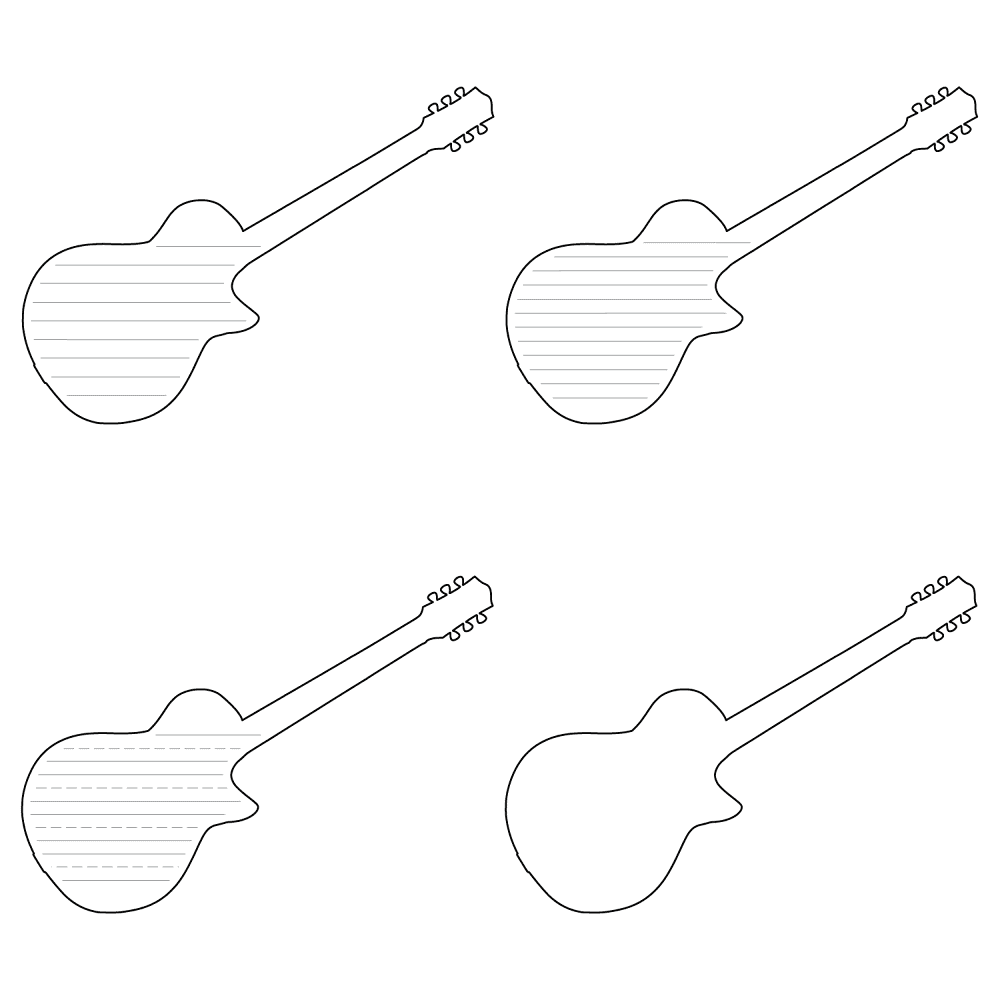
A child can tap a correct answer on a screen in seconds, yet still struggle to explain the underlying logic independently. This contrast highlights the difference between recognizing information and actively processing it through physical engagement with the task at hand.
When a student sits down with a printable guitar template to map out chords or scales, they engage in a rigorous mental and physical sequence. They must first look at the musical goal, locate the specific frets on the diagram, interpret the notation symbols, and plan their physical response. Then, they initiate the movement of the pencil, write or mark the fretboard, check their work against a reference, correct any errors, and continue the process. This sequence matters because it forces the brain to move from passive intake to active architectural planning, turning abstract musical theory into a concrete, visual reality that the child has constructed themselves.
Completing a guitar template requires a complex integration of fine motor coordination and visual-motor integration. Fine motor coordination is the precision required to hold a pencil and place a small dot within the narrow space of a fretboard diagram, much like the control needed to button a shirt. Visual-motor integration allows the child to take what they see on the page and translate it into a guided hand movement, effectively syncing their eyes with their fingers. By repeating this process, a child also strengthens their working memory, as they must hold the shape of a C-major chord in their mind long enough to translate it onto the paper grid, reinforcing neural pathways that go far beyond simple recognition.
Physical materials provide a stable, static context that digital interfaces often lack by design. On a printed template, the page position remains constant; the chord you marked at the top of the page doesn't slide away or change color when you move your mouse. This stability allows for the use of handwritten notes and physical corrections, which act as a tactile record of the learning process. Unlike digital platforms that offer instant, often frictionless feedback, paper documents require the student to interact with the environment, creating a spatial map of where their notes are located, which aids in long-term memory retrieval and conceptual organization.
Attention as a Cultivated Skill
Sustained attention is a developmental skill rather than a static personality trait, and the learning environment plays a significant role in its maturation. Digital screens are often filled with competing stimuli, such as notifications, animations, and rapid transitions that demand constant executive function re-allocation. In contrast, a simple printable guitar template offers a predictable, low-distraction environment where the number of competing stimuli is intentionally limited. By reducing the load on the child’s sensory processing, the physical paper activity allows them to focus their energy entirely on the cognitive task of understanding musical structure, fostering a sense of calm task persistence.
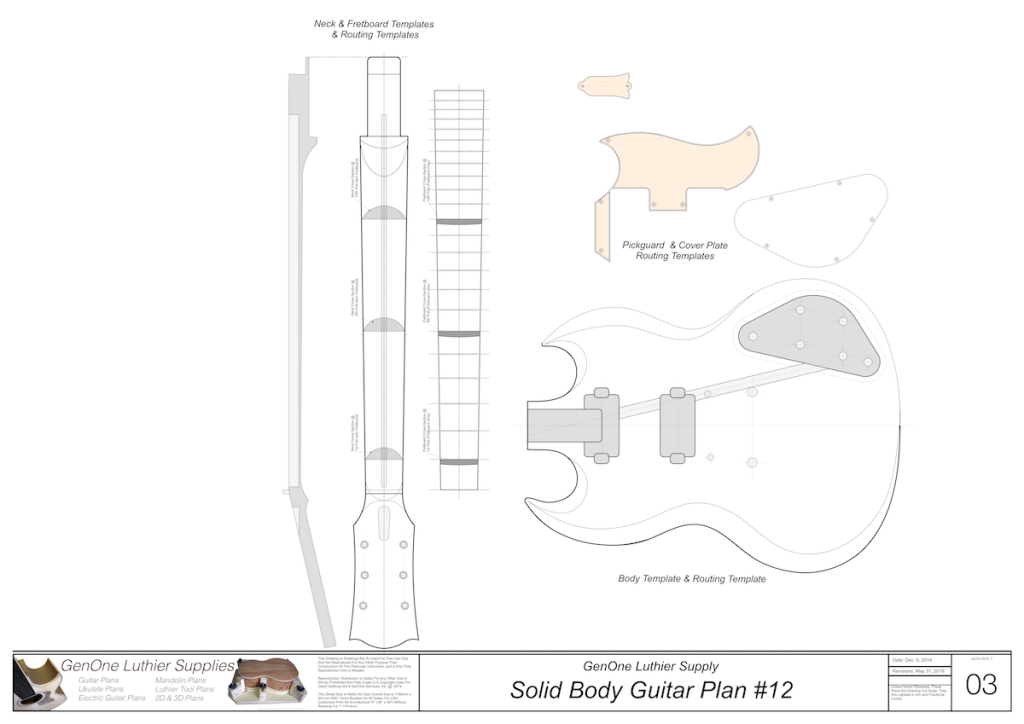
We often mistake ease of use for efficiency, but learning frequently benefits from what we call productive friction. When a child works with a printable guitar template, they must slow down because the pencil does not move as fast as a digital cursor, and writing requires deliberate physical effort. This friction creates a necessary pause for the brain, turning a moment of activity into a moment of reflection and potential correction. While digital tools are excellent for rapid exploration, this physical effort ensures that the child is not just moving through content, but truly grasping the structure of the music through repetition and intentional, tactile engagement.
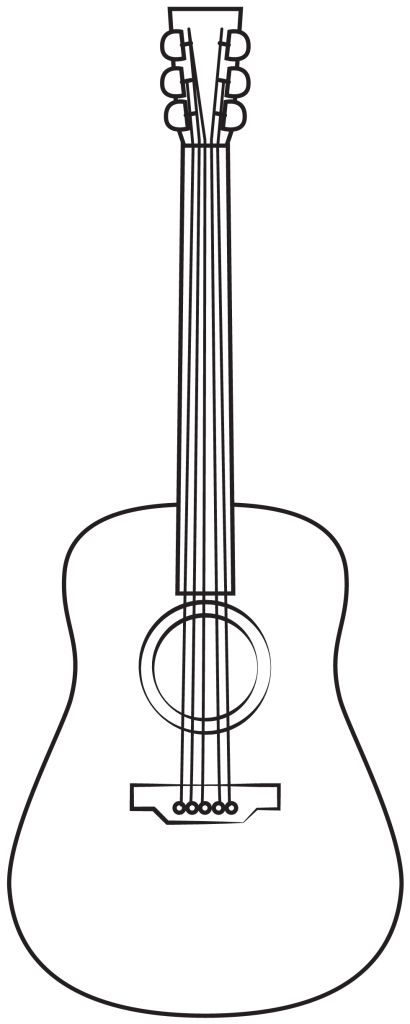
To implement this effectively, parents can designate a focused practice area, model the use of physical templates alongside instrument practice, and encourage self-correction by asking the child to compare their marks with a master reference. Teachers can integrate these templates into lesson plans by alternating between digital demonstrations and hand-drawn application exercises, while homeschool educators can use them to create tactile learning portfolios. However, these tools should not be used as endless, mindless busy work. If a child becomes disengaged, they may be better served by movement, social jam sessions, or real-world exploration. A balanced ecosystem uses digital tools for breadth and discovery, while using printable templates for depth, reflection, and the long-term consolidation of skills through the cycle of discuss, print, practice, and apply.