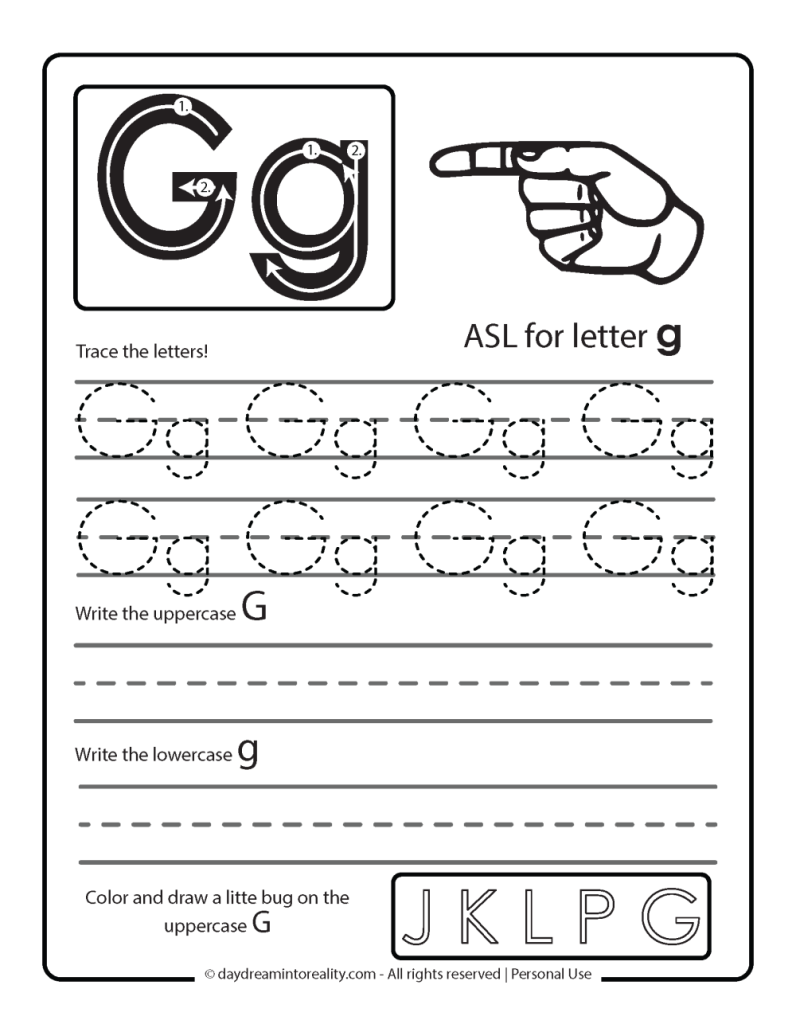
Six-year-old Leo sits before a tablet, his finger darting across the glass to complete a colorful word game. It is fast, bright, and satisfying. Yet, when he sits down later with a paper-based letter g traceable worksheet, the experience shifts entirely, requiring a different kind of focus.
Digital tools offer incredible speed and immediate feedback, which can be wonderful for engagement and rapid skill acquisition. However, the introduction of physical letter g traceable worksheets serves as a deliberate counter-balance to the high-velocity environment of modern technology. By stepping away from the screen, we invite the child to slow down and experience the tactile reality of the written word, which creates a distinct neurological footprint for learning.
Before a Child Learns the Answer, the Body Is Already Learning
Long before a child masters the phonetic sounds of the letter G, their body must engage in a complex series of motor commands to hold a pencil and drag it across the page. This physical process involves fine motor control, hand pressure, and wrist stability, which are foundational skills for long-term literacy and cognitive growth. As they carefully trace the curves and lines of the letter g, they are practicing hand-eye coordination and spatial awareness in a way that no touchscreen can replicate.
A paper page functions like a small, static landscape where every inch holds specific meaning for the developing brain. Unlike a scrolling digital interface, a worksheet provides a fixed orientation where top, bottom, left, and right remain constant, helping children build a sense of spatial structure. When a child navigates from a picture of a goat to a row of dotted letters, they are building contextual memory that anchors the information to a physical location in their world.
The true magic often happens in the quiet, empty seconds between a child seeing a question and committing their answer to the page. During this pause, the brain is busy retrieving information, deciding on the path of the stroke, and exercising the patience required to complete the task. This intentional slowing of the learning process fosters deeper engagement and allows the working memory to process complex information without the distraction of instant, automated rewards.
When Mistakes Become Visible
When a child miscalculates the shape of a capital G on a worksheet, the mistake remains visible as a smudge or an errant line, which offers a unique opportunity for growth. Instead of a digital button that simply flashes red, the paper holds the history of the effort, allowing the child to erase, adjust, and try again. This process teaches metacognition and persistence, showing the child that a mistake is not a failure, but rather a necessary step toward refinement and final success.
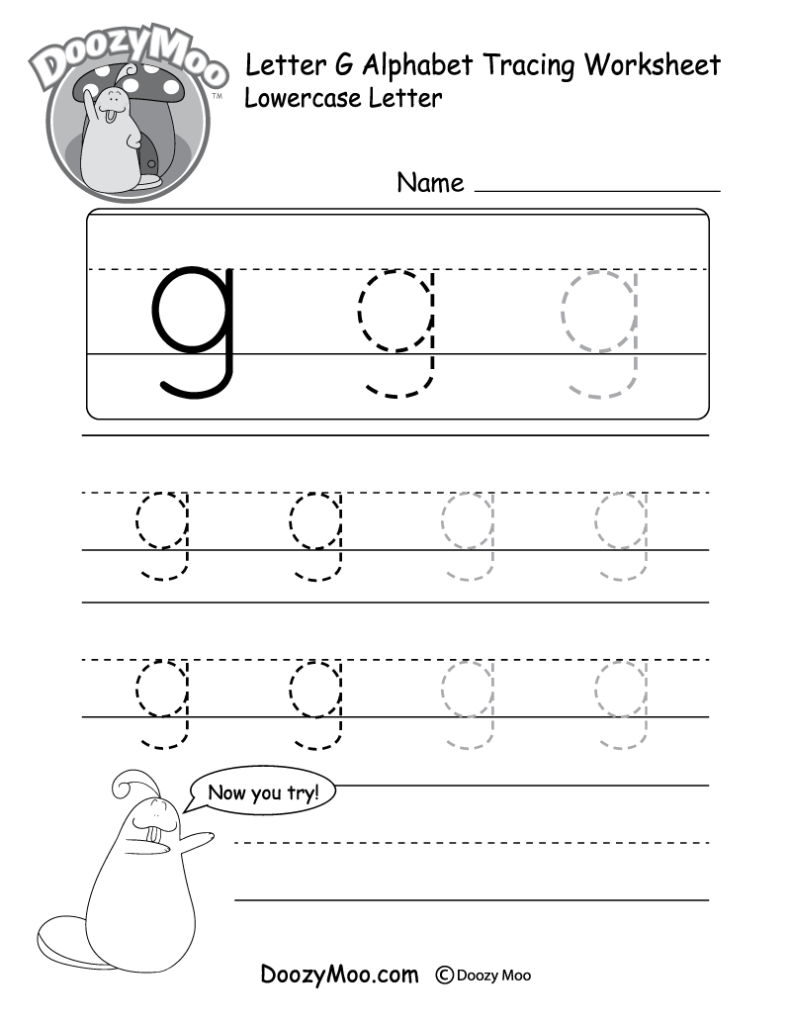
Holding a completed page after finishing a set of letter g traceable worksheets provides a sense of tangible ownership that digital completion often lacks. Because the work is physical, the child can touch, look at, and display their progress, which reinforces a sense of accomplishment and identity as a learner. This feeling of ownership helps build confidence, as the child recognizes that their own physical effort and time resulted in a finished, visible product.
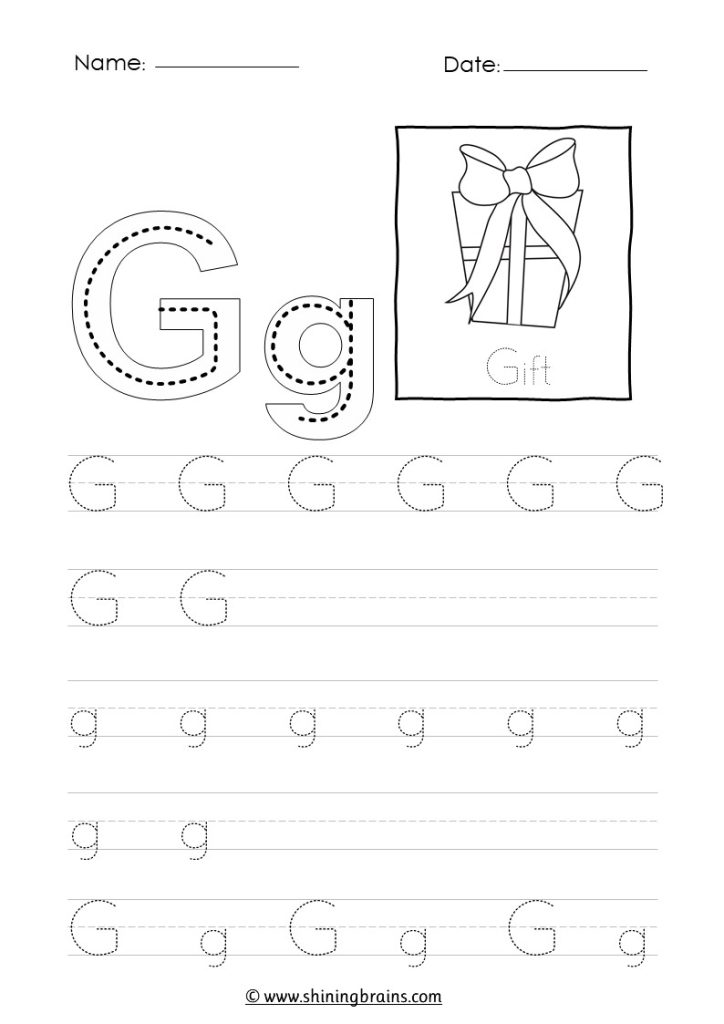
In a modern classroom or homeschool setting, these worksheets find their place as anchor activities that promote independent, quiet work. For a preschooler, they might be a sensory introduction to shapes, while an older elementary student might use them to refine cursive technique or improve overall penmanship. These sheets are most effective when used as a transition tool, providing a calming, predictable activity that bridges the gap between high-energy digital lessons and quiet independent study.
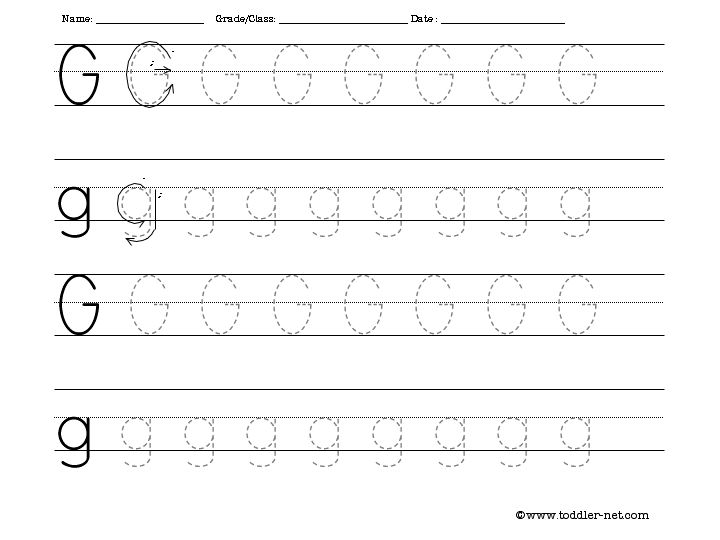
The goal of integrating paper-based work is not to reject technology, but rather to ensure that a child's learning environment is as rich and varied as possible. By alternating between screen-based exploration and the focused, slow pace of physical writing, we provide a balanced diet for the developing brain. We do not need to choose one or the other; instead, we must create a rhythm where the child can benefit from both the speed of the digital world and the quiet, deliberate pace of the pencil on the page. Learning is not always about optimization or efficiency; sometimes, the most profound developments happen in the slow, steady moments where the hand moves and the mind has room to think.