
Children often perceive traditional worksheets as labor, yet they approach visual activities like coloring with natural curiosity. By integrating academic objectives into coloring pages of NFL players, educators can leverage this engagement to facilitate learning through active participation.
When a child engages with a coloring page, they are doing more than just filling in outlines; they are building a bridge between their personal interests and academic concepts. By moving away from passive observation, we embrace the philosophy of learning through doing. This approach allows a student to remain focused on the task while reinforcing specific information, turning an NFL player illustration into a functional pedagogical asset.
What Makes an Educational Coloring Page Different?
An educational coloring page differs from a standard coloring book because it incorporates explicit learning objectives into the layout. Instead of just a character silhouette, the page might include labeled equipment or tactical diagrams that require the child to process information before choosing a color. This strategic design ensures that every stroke of the crayon contributes to a deeper understanding of the subject matter, effectively turning the activity into an active cognitive challenge.
For early literacy, coloring pages of NFL players can be redesigned to focus on letter recognition and vocabulary. Teachers can include the first letter of a position or a player's last name in a traceable font at the bottom of the page. By asking a child to identify the starting sound of Quarterback or Receiver, the coloring page becomes a phonics tool where the visual representation of the athlete reinforces the phonetic connection between letters and their respective sounds.
Coloring Pages for Early Math
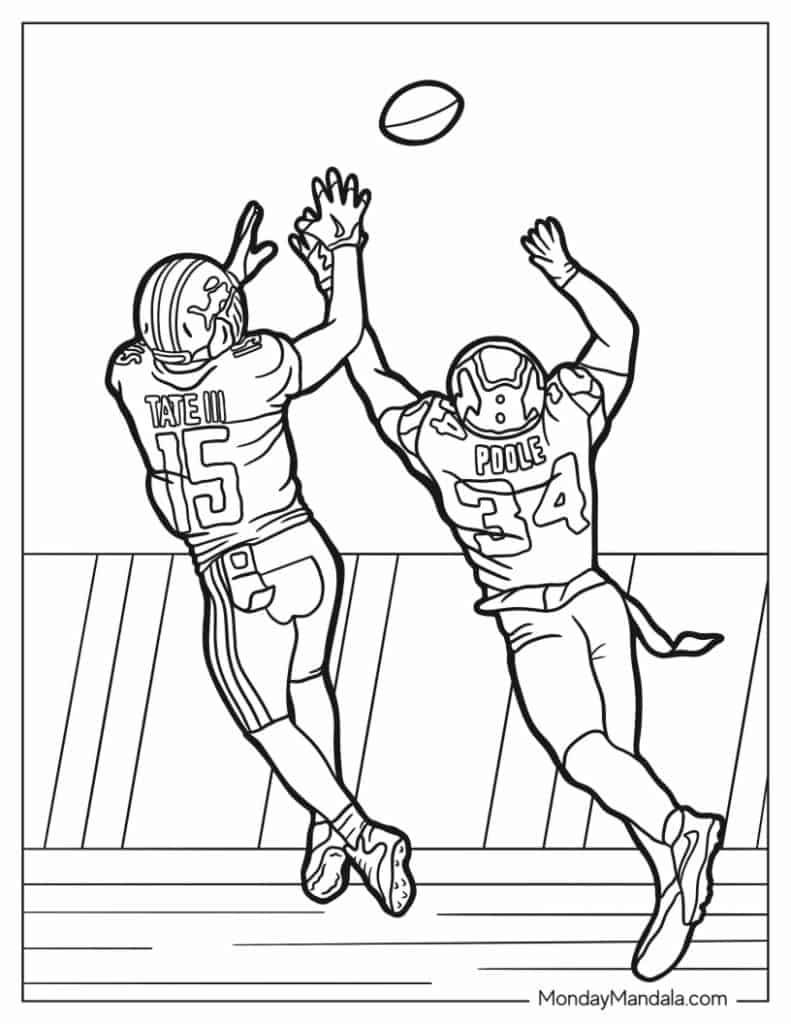
Math skills can be seamlessly integrated into NFL-themed coloring pages by focusing on jersey numbers, shape recognition, and simple counting tasks. A designer might task a child with coloring all players wearing prime numbers in a specific shade, or ask them to count the total number of helmets on the page. By classifying players based on their uniform numbers or geometric elements in the protective gear, children practice essential math skills while remaining engaged with their favorite sport.
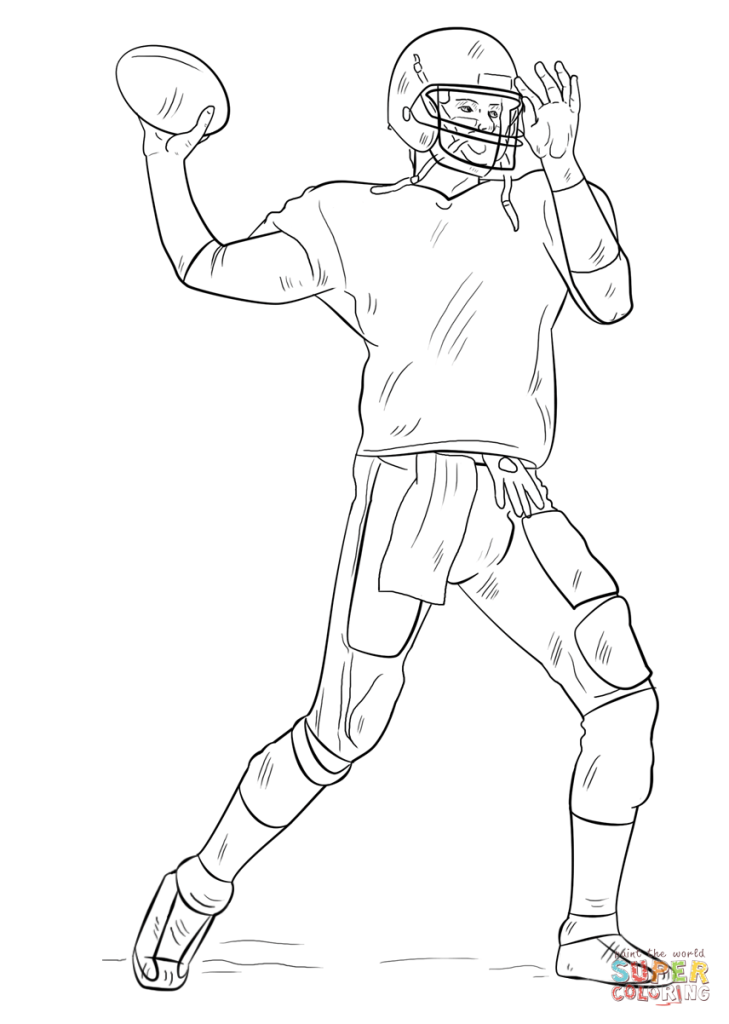
When applying science concepts to football, coloring pages can highlight the biomechanics of the human body or the physics of motion. For instance, a coloring page showing an athlete in a throwing stance can be used to explain skeletal structure or the arc of a football through the air. These pages can demonstrate how muscles work in tandem to create movement, turning a simple depiction of a player into an anatomy or physics lesson that students can visually explore through shading and detail.
Social and emotional learning is naturally supported by the team-oriented structure of football. Coloring pages of NFL players showing positive sportsmanship, such as teammates celebrating a touchdown or helping an opponent up from the turf, provide a visual prompt for discussing empathy and cooperation. These illustrations serve as an anchor for classroom conversations regarding how we treat our peers, how we handle both victory and defeat gracefully, and the value of contributing to a collective goal rather than individual glory.