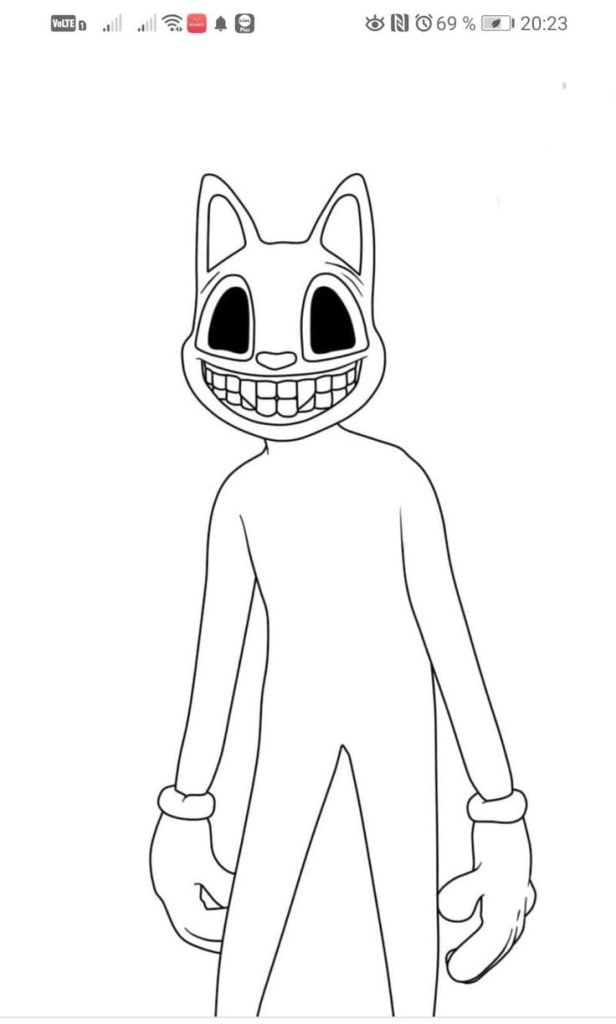
Leo finishes his favorite cartoon and immediately taps the game icon on his tablet. As the bright lights flicker and rapid sounds fill the air, a printed cartoon cat coloring page waits silently on the table, offering a completely different sensory and attentional environment for his afternoon.
When the screen disappears, the sensory landscape shifts from rapid-fire digital stimuli to a quiet, tactile experience. Moving from a glowing display to a piece of paper requires a total recalibration of attention, shifting focus from passive observation to active, deliberate physical engagement. This transition provides a necessary pause in the high-speed flow of digital life, allowing the child to settle into a slower, more rhythmic pace where they control every aspect of the creative process.
What Changes When the Screen Disappears?
Physical interaction and tactile engagement
Coloring provides a unique opportunity for children to refine their fine motor skills through the repetitive, steady motion of grasping a crayon or marker. As they navigate the lines of a cartoon cat coloring page, they practice essential hand-eye coordination that is distinct from the swipes and taps used on touchscreens. This tangible interaction with paper and pigment helps bridge the gap between abstract visual concepts and concrete physical control over their environment.
A Coloring Page Has a Beginning and an End
Unlike many digital games that feature infinite loops or open-ended progression, a coloring sheet presents a clearly defined task with a visible beginning and end. When a child picks up a pencil to fill in a specific shape, they are engaging in a finite exercise that offers a sense of accomplishment upon completion. This boundary helps children understand the value of seeing a project through to the finish line, providing a structured psychological reward that is entirely different from the instant gratification of a digital point system.


When a child selects colors for their cartoon cat coloring page, they are making a series of independent creative decisions that define their unique expression. Unlike a game where color palettes are often pre-programmed or restricted by software limitations, the physical page gives them total autonomy to choose bright, bold, or unexpected hues. This freedom fosters a sense of agency, allowing children to explore their own aesthetic preferences and stylistic choices without the pressure of digital performance metrics.